

Japanese akoya, laboratory tested
Hanadama pearls
花珠, hanadama, flower pearl. The narrow band at the top of a Japanese akoya harvest, confirmed by a laboratory rather than by the seller.
We don't buy hanadama. We select the pearls ourselves in Japan and then send them to a laboratory, which is the reverse of how most of this category is sold. Every piece here carries a numbered report from the laboratory that tested it.
~ Jeremy Shepherd, Founder and CEO

Shop hanadama
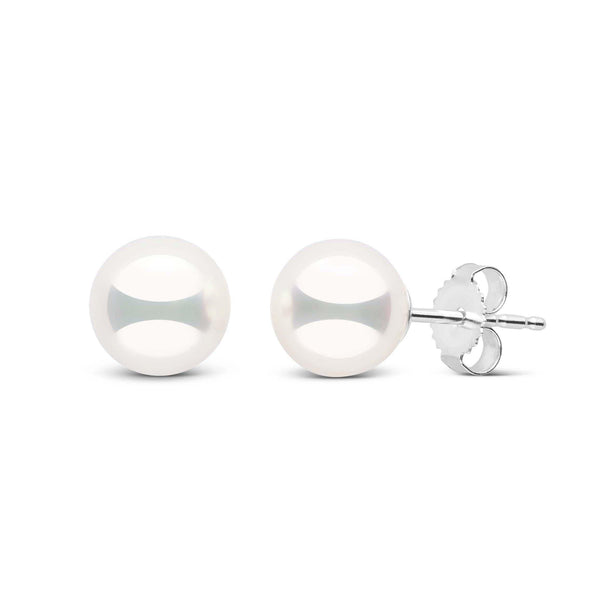
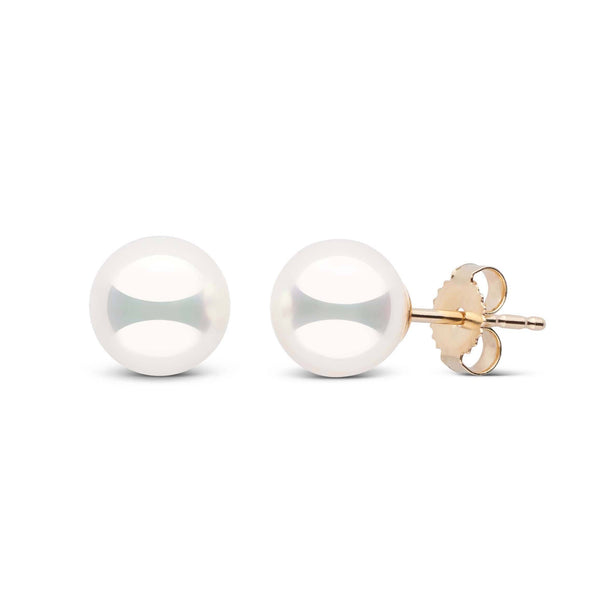
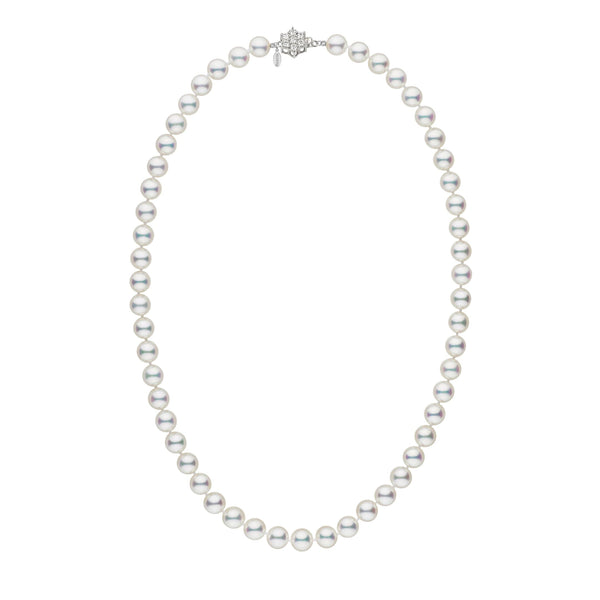
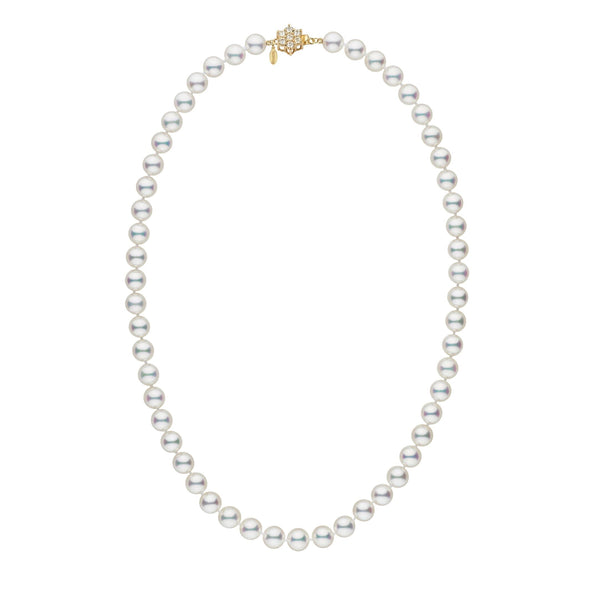
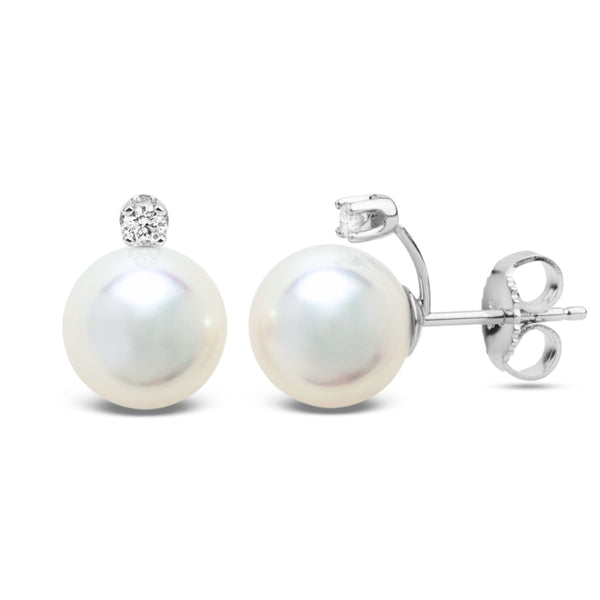
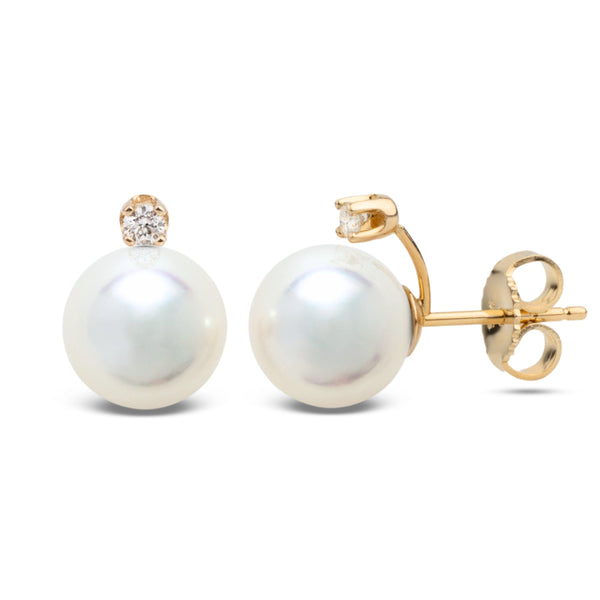
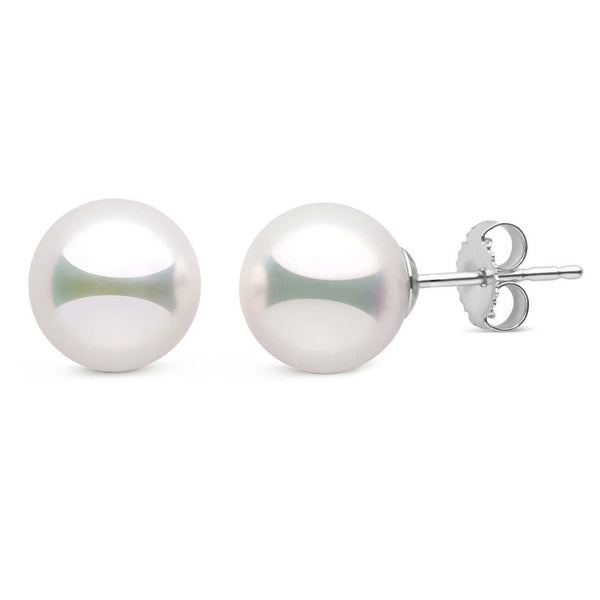
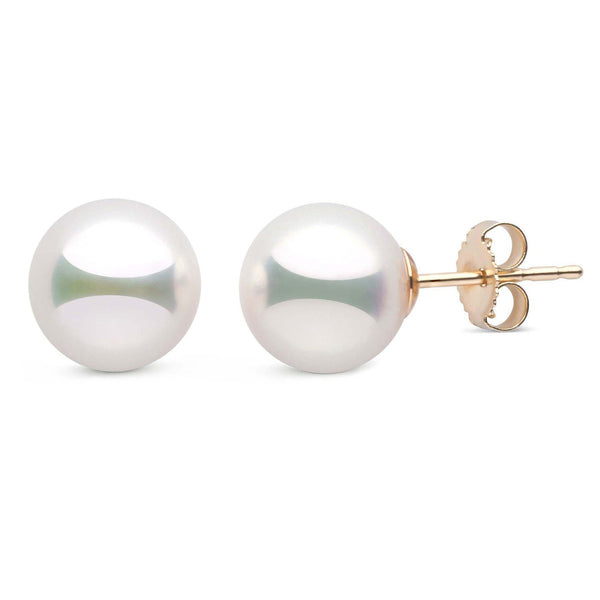
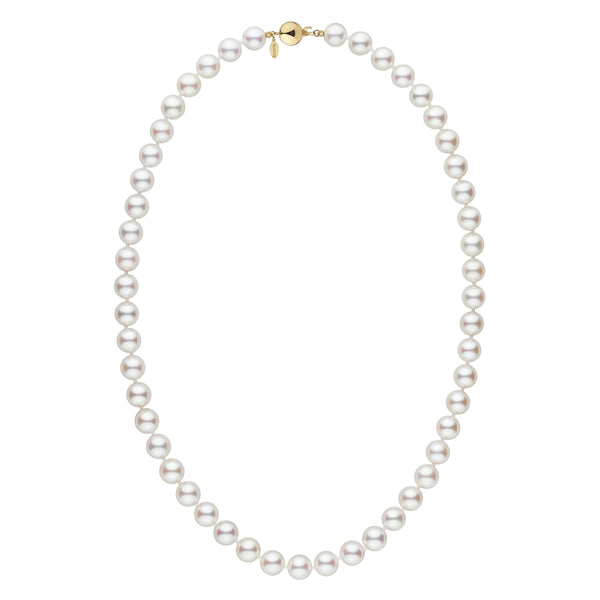
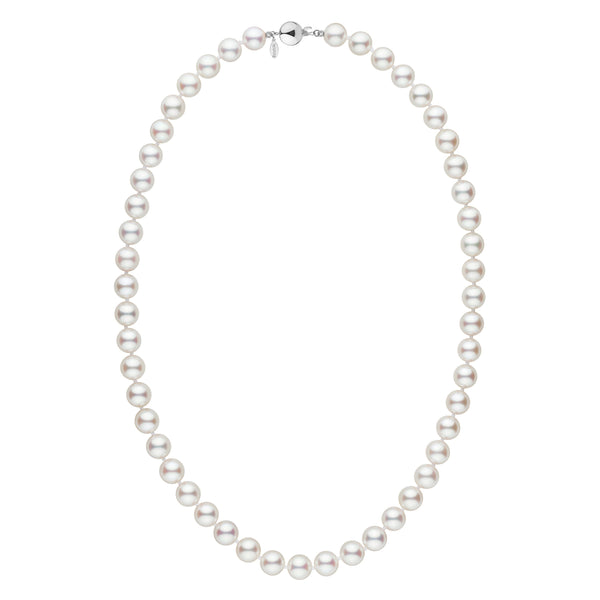
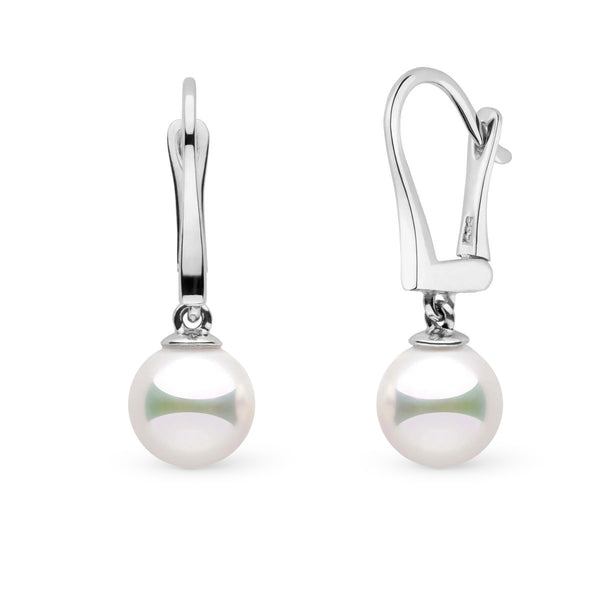
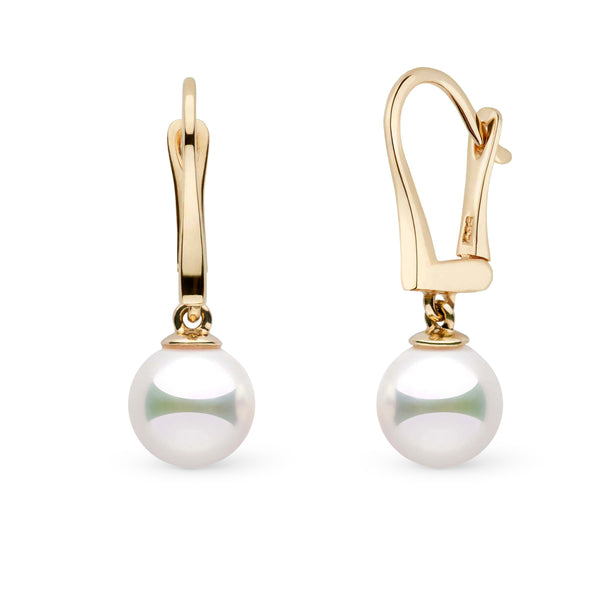
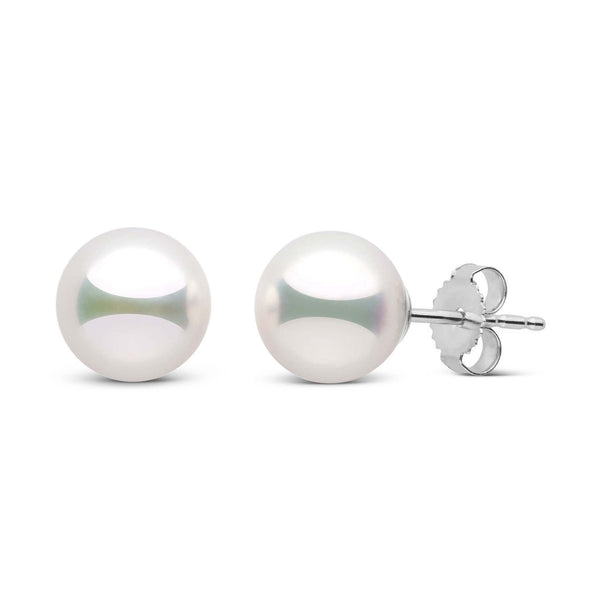
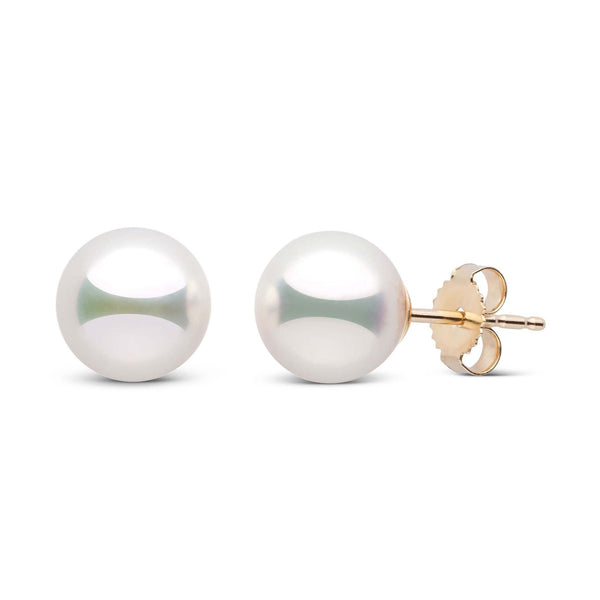
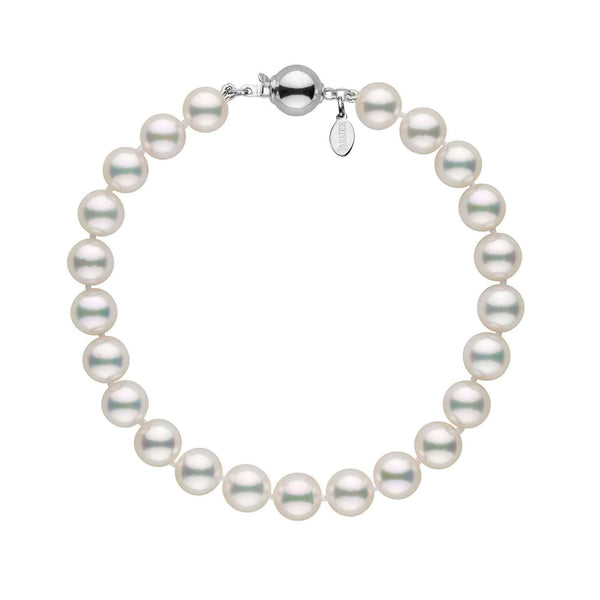
Strands and bracelets are knotted to order in Los Angeles. Earrings are matched from certified pearls at the same bench.


What is actually being tested
The report, and what it does not say
A hanadama report is issued by an independent gemological laboratory after the strand is tested, not by the company selling it. It records luster, surface, shape, matching and nacre, and modern reports measure nacre thickness by X-ray.
We carry strands with reports from two laboratories. The Pearl Science Laboratory of Japan certifies pearls as hanadama against its published criteria. The Gemological Institute of America does not certify pearls. It examines them and issues a pearl classification report, and on qualifying akoya it notes that the pearls fall within the quality range the trade knows as hanadama. GIA holds the stricter line, particularly on surface. A strand that earns that note from GIA would meet the Pearl Science Laboratory's requirements, though the reverse is not always true.
What a report can't tell you is where inside hanadama a strand landed. The range is wide, and that's where the difference in price comes from.
The thing almost nobody explains
Two strands, both hanadama, and not the same strand
Two strands can hold valid reports and still differ dramatically, enough that one sells for a small fraction of the other. Nothing printed on the report captures that gap. Four things do.
Luster
The single most important factor in any akoya and the one the eye reads first. A fine hanadama throws a sharp, mirror-like reflection with depth behind it. Weak luster is weak luster whatever the report says.
Nacre density
Thickness is measured and printed. Density is not. Slow winter growth lays down compact nacre, and compact nacre is what produces the sharp reflection and what makes a pearl last.
Matching
Matching one strand can mean going through thousands of pearls by hand. The finest hold consistent end to end and mirror from one side to the other. Matching is most of what a great strand is charging you for.
Overtone and orient
Rose, silver or a cooler natural white, and on rare strands a faint prismatic shift through the nacre. Orient is uncommon in akoya and no report grades it.
Which is why we do three things. We only submit pearls we expect to pass near the top of the range. We will photograph the exact strand before it ships. And a specialist will put four or five of them side by side on camera so you can choose between them yourself.
The difference almost nobody makes
Selected first, certified second
Most companies buy hanadama. The lot arrives already certified, the certificate comes with it, and the seller's own judgment never enters the picture. We work the other way around. Uncertified pearls are selected against our standards first, and only what we picked goes to a laboratory. It's why we go to Japan three times a year.
That's the whole difference. A certificate confirms a strand cleared the bar. It says nothing about who chose that strand, or what they turned down to get there. When the selecting happens first, the laboratory is confirming a decision rather than making one for us.
It also takes a relationship. Buying uncertified material at this level and having it certified afterward is not something a supplier does for a new account. We work with a few houses in Japan and almost everything comes from two of them. That's also how we know the pearls grew for two full seasons, a practice known in Japan as koshimono, meaning over one winter. Shells left in the water for eighteen to twenty-four months lay down denser, more compact nacre, and akoya is harvested in the coldest months precisely because slow winter growth is what produces the sharp reflection.
Japan produced more than one hundred tons of akoya a year at its peak. In 2023 it produced 13.2 tons, the lowest figure since modern records began. At the hanadama end of a harvest that small, access is a relationship rather than an order form.

Choosing a size and a length
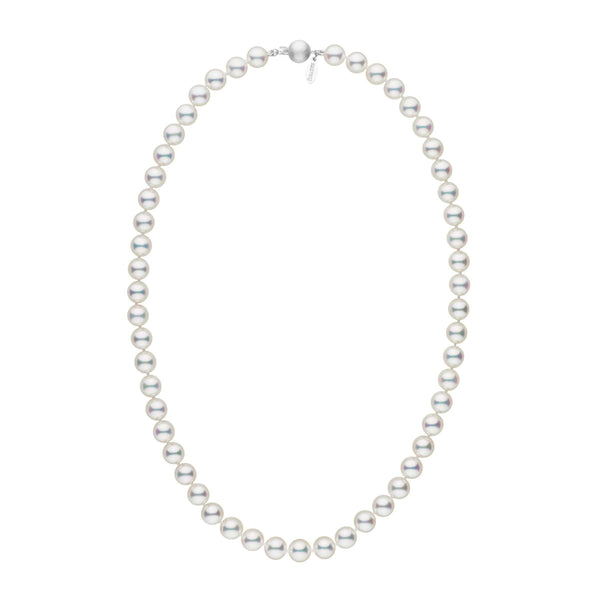
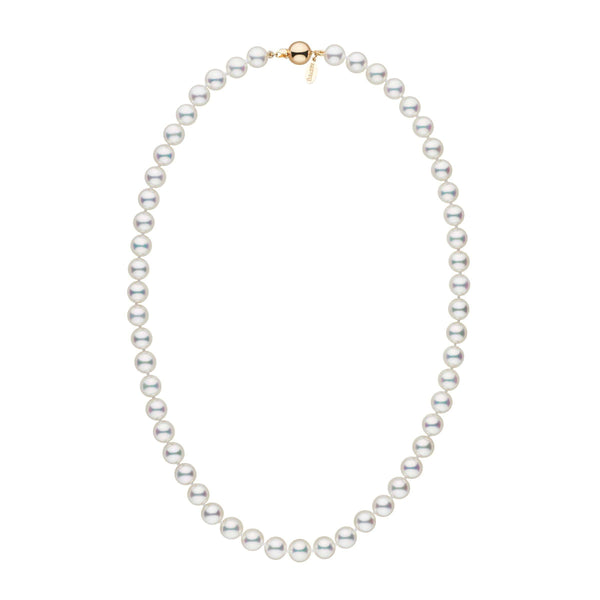
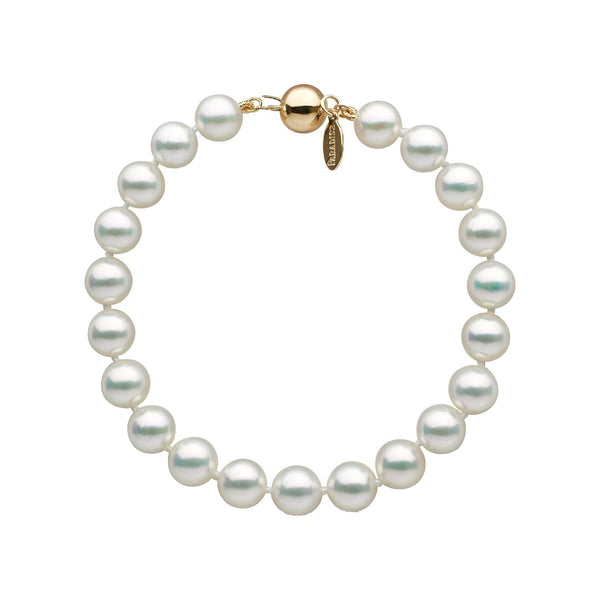
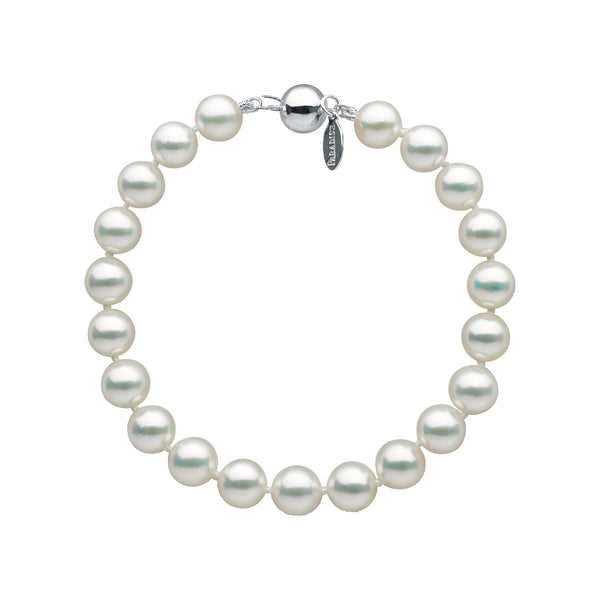
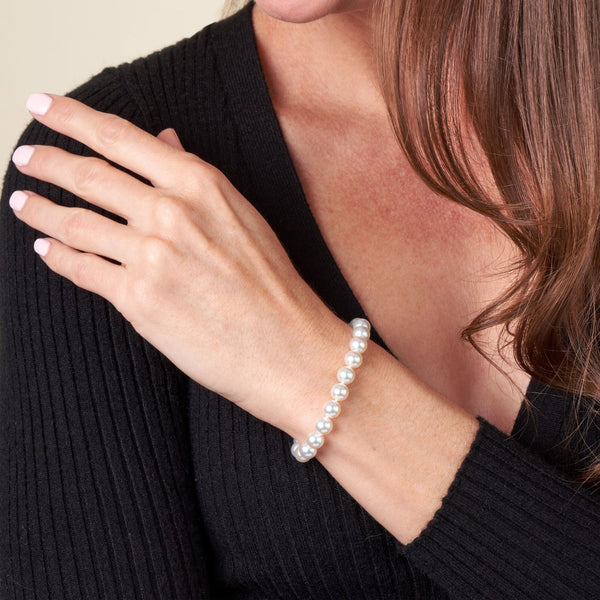
Every pearl below is a real akoya, photographed at true scale against the others.

Hanadama here runs from about 6.5 mm to 9.5 mm. The 7.0 to 7.5 mm strand is still the most popular size by a wide margin, and 8.0 mm is where the price begins to climb steeply, because large akoya are scarce before you add a report to them. One millimeter sounds like nothing, but a pearl is a sphere. Compare the 7 mm and the 9 mm above.
16 inch, choker
Sits at the base of the neck. Best with open necklines and the most traditional of the three.
18 inch, princess
Just below the collarbone. The length most people choose, and the easiest to wear with anything.
20 inch and longer
More relaxed, layers well, reads less formal. Worth considering if you already own an 18.
Before you buy
What does hanadama mean?
花珠, hanadama, flower pearl. It is not a type of pearl. It is a designation given to Japanese akoya from the top of a harvest, based on luster above all, then nacre, surface, shape and matching. Every hanadama pearl is an akoya. Not every fine akoya is submitted for testing, and ours are only submitted when we expect them to pass near the top.
Who tests hanadama, and is there one standard?
There is no single universally accepted hanadama standard. Laboratories apply their own criteria and they differ, particularly on nacre thickness. The Pearl Science Laboratory of Japan is the best known, and it is the only Japanese laboratory whose hanadama certificates we accept. We also carry strands examined by GIA. GIA does not certify pearls. It issues a pearl classification report, and on qualifying akoya it notes that the pearls fall within the hanadama quality range. GIA applies the stricter standard, particularly on surface. That is why we tell you which laboratory tested your strand rather than simply calling it hanadama and leaving it there.
If two strands are both hanadama, why is one so much more expensive?
Because the designation covers a wide band. Two strands can both be certified and still differ dramatically in luster, matching, overtone and nacre quality, and one can sell for a small fraction of the other. The report confirms the strand cleared the bar. It does not say by how much. Luster is where the gap usually shows first, and it is the one thing a photograph struggles to carry, which is why a specialist will put four or five strands side by side on camera for you.
What is natural white hanadama?
Nearly every akoya is pinked, a treatment that brings up the faint rose overtone people associate with Japanese pearls. Natural white skips that one step. The pearls go through the same maeshori and bleaching as every other akoya, are never pinked, and are chosen afterward for their own color and luster. Same testing, same laboratory, and the report notes no color treatment. The look is a cooler white rather than the traditional rose. It is a different look, not the same look reached without treatment.
Does everything here come with a laboratory report?
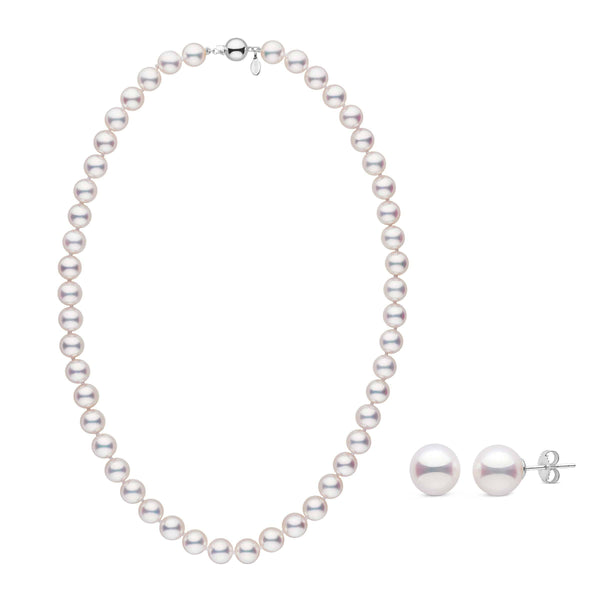
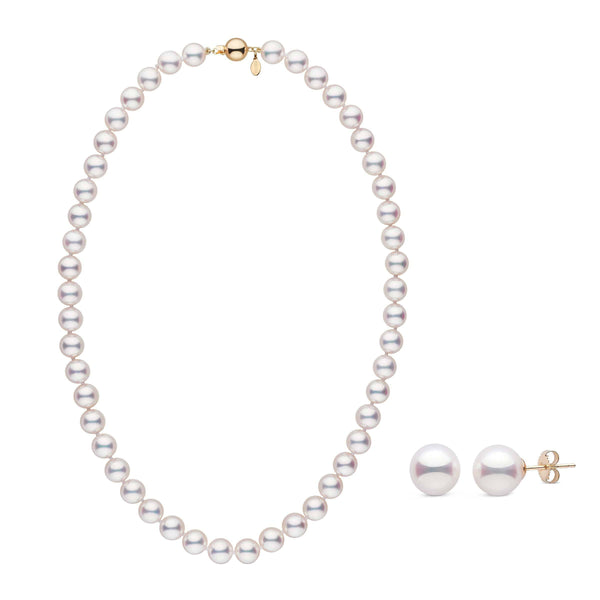
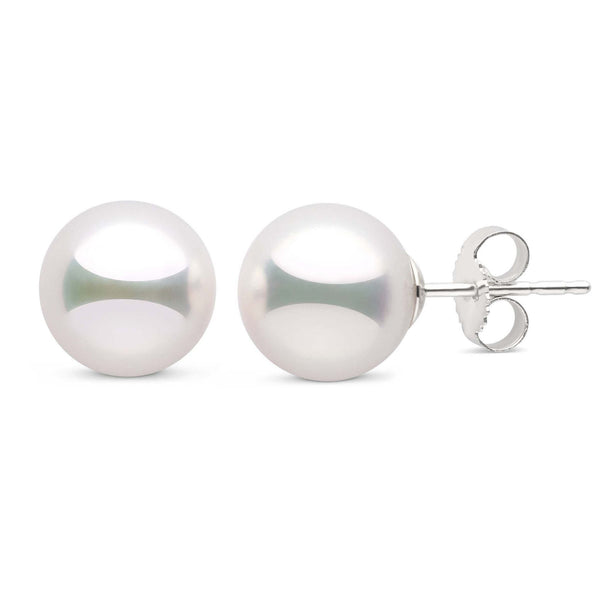
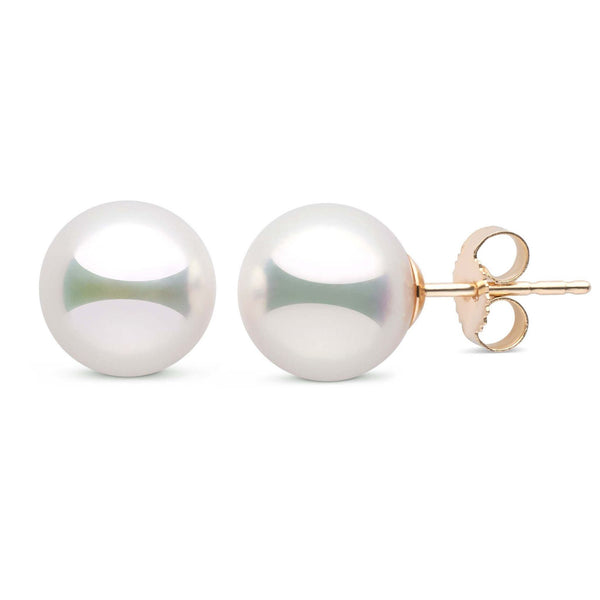
Strands, matched pairs of studs and sets do, and a set is tested together so the strand and the earrings belong to each other. If you want to read the report before you commit, ask and we will send you a photograph of it.
Can I see the exact strand before it ships?
Ask us and we will photograph it for you. Strands and bracelets are knotted to order in our Los Angeles studio and earrings are matched from certified pearls at the same bench, so the piece you receive is assembled for you rather than pulled off a shelf. Request photographs or a short video on any product page, at no cost and with no obligation to buy.
A few reviews from hanadama customers
This was a special gift for my daughter on her wedding day. I first purchased an Akoya AAA necklace from another well known pearl house, but it didn't have the “wow” factor I wanted and the overall quality of the stringing did not warrant the price. So I returned it and decided to seriously stretch my budget and buy the natural white hanadamas from Pearl Paradise, and am SO glad I did. Simply stunning.
Nancy M. VerifiedI bought this necklace to replace a lost AAA akoya 8.0-8.5mm necklace which I also purchased from PP. My wife recently wore this necklace and I was very impressed on how it looked. The natural white color glows on her neck from across a room, and the size makes quite a statement. This necklace is the nicest simple (i.e. pearl only) akoya necklace I have ever seen in any Jewelry store.
Barry R. VerifiedI was originally undecided and ordered the 8.0 - 9.0mm White South Sea Pearl Stud but after the Pearl Paradise team sent me photos to compare, I changed my mind and the team was able to switch my order before it was shipped to 8.0 - 8.5mm Natural White Hanadama Pearl Stud. I love my earrings and the quality was better than I expected. The luster and whiteness is amazing!
Mindy H. VerifiedStill deciding?
Hanadama is the category where the difference between two hanadama strands is hardest to see in a photograph and easiest to see side by side. A specialist will put four or five of them side by side on camera for you. Most appointments run about twenty minutes.


