From the J. Hunter Pearl Farm
Fijian pearls
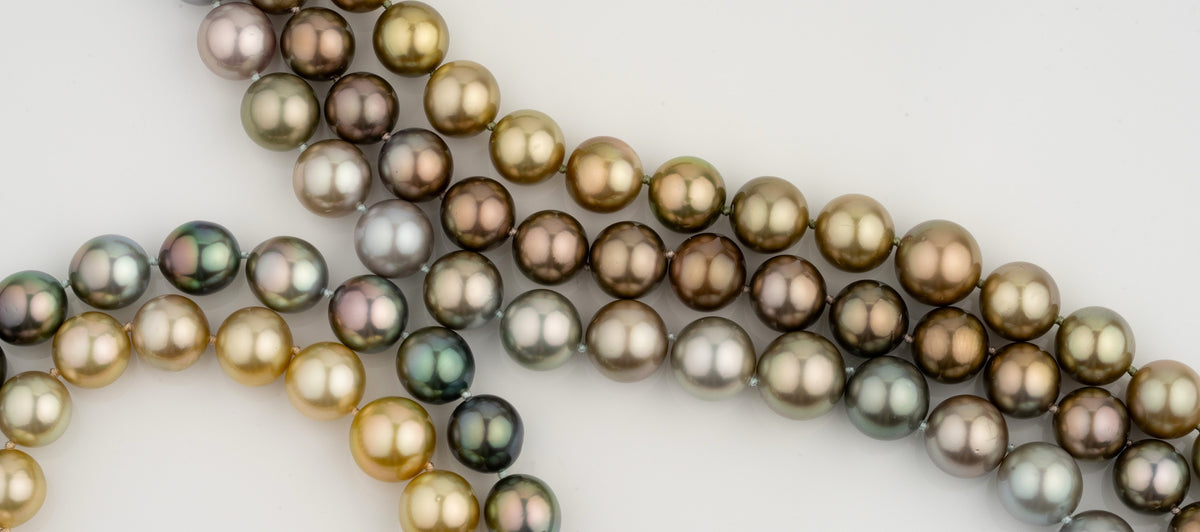
Among the rarest cultured pearls in the world, grown by one small farm in Fiji in a range of natural color that no other pearl produces.
- About 25,000Pearls a year
- Natural colorNever dyed
- One of eachMatched by hand
What makes them different
A small farm and a color range found nowhere else.
Fijian pearls come almost entirely from the J. Hunter Pearl Farm, which harvests roughly 25,000 pearls a year. That's a fraction of what the major Tahitian and South Sea farms produce.
The color is the pearl's own
Gold, green-gold, chocolate, pistachio, silver and blue, often with several of them moving across one pearl. Nothing is dyed, irradiated or color treated. What you see is what the pearl grew.
Supply is set by the farm
With one boutique farm producing nearly all of them, there's no second source to make up a shortfall. When a harvest is small, there are simply fewer pearls.
Every strand is matched by hand
With colors this varied, a strand means sorting through a large number of loose pearls to find ones that belong together. Most of what separates one strand from another is that work.
The strands
Fijian pearl strands
Round, baroque and keshi strands, each listed with its own measured size range. There is one of each.
-
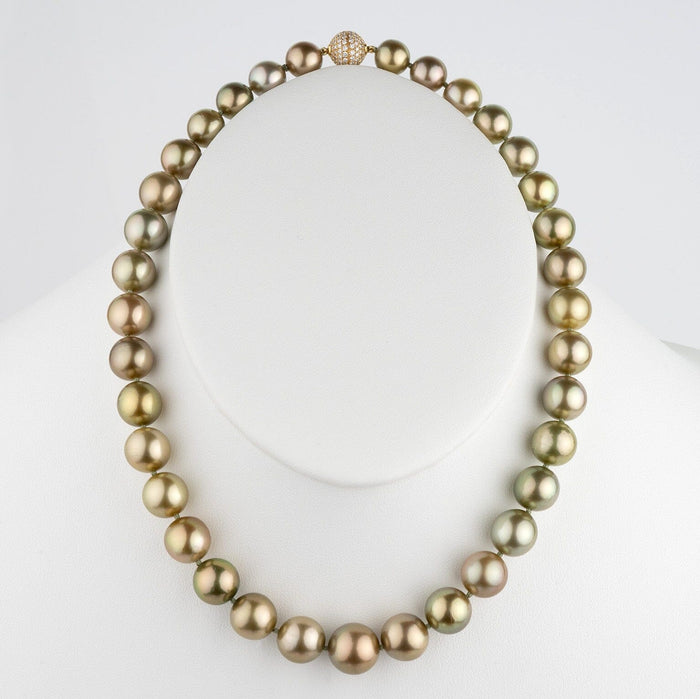 J. Hunter Green-Gold Chocolate Fijian Pearl Necklace, 9.6–13.0 mm
$45,120
-
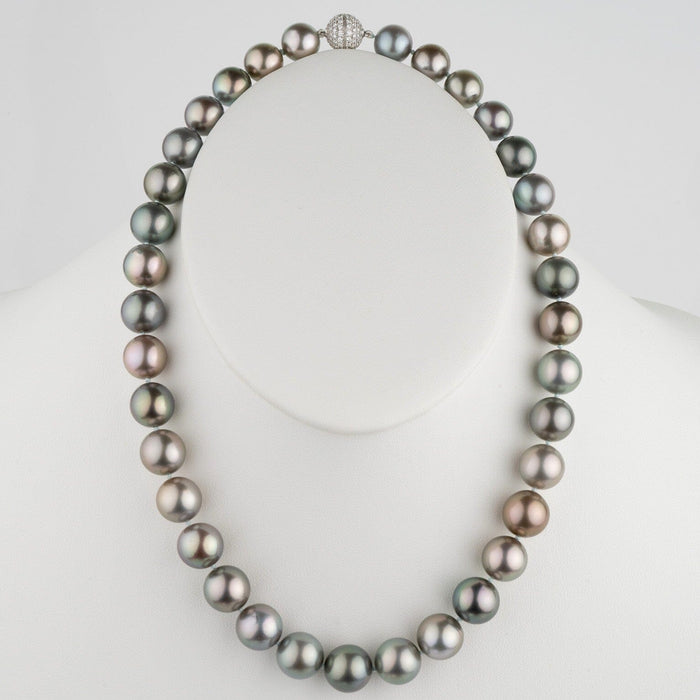 J. Hunter Multicolor Fijian Pearl Necklace, 11.3–13.3 mm
$43,920
-
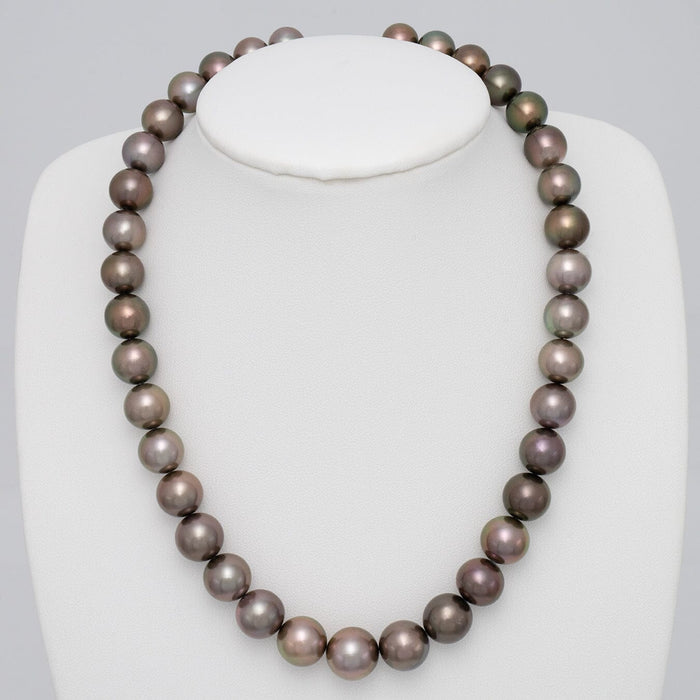 J. Hunter Dark Chocolate Fijian Pearl Necklace, 9.2–12.5 mm
$36,400
-
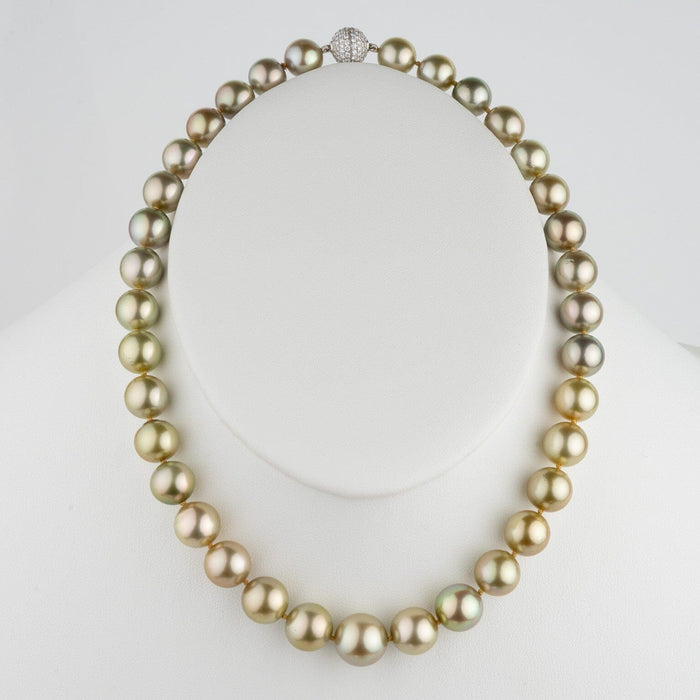 J. Hunter Green-Gold Fijian Pearl Necklace, 10.0–12.9 mm
$33,120
-
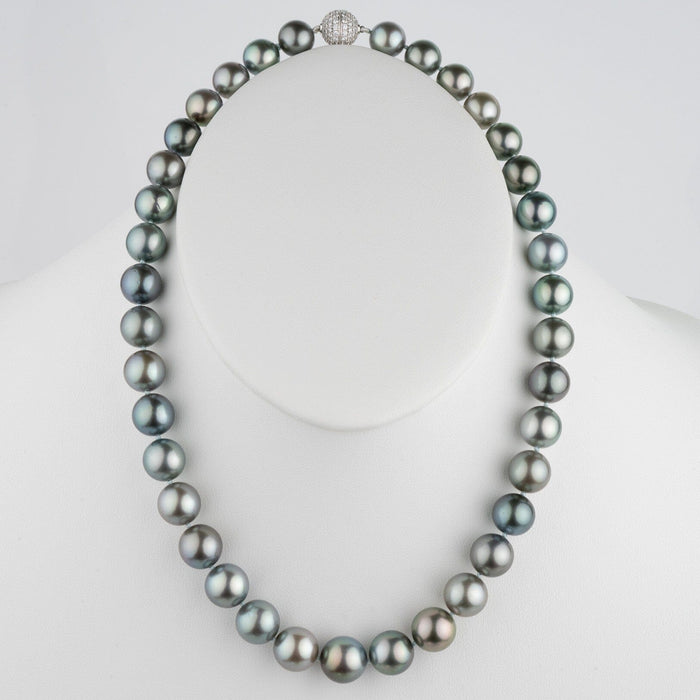 J. Hunter Silver-Blue-Green Fijian Pearl Necklace, 10.7–13.0 mm
$31,680
-
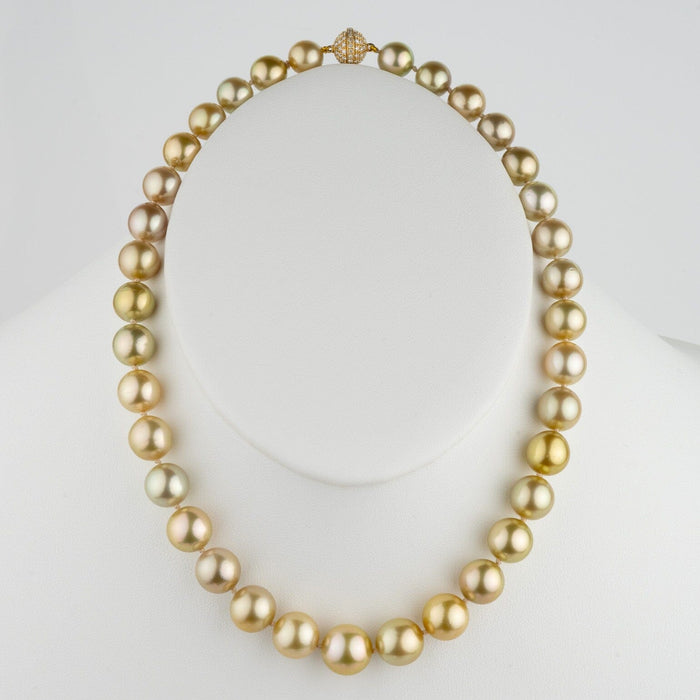 J. Hunter Golden Fijian Pearl Necklace, 9.3–12.8 mm
$29,900
-
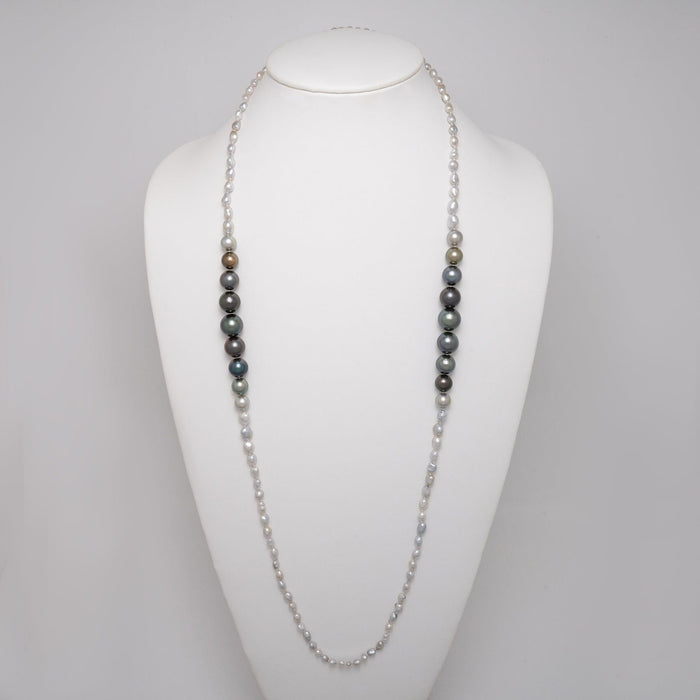 J. Hunter Keshi and Round Fijian Pearl Convertible Necklace
$6,825
-
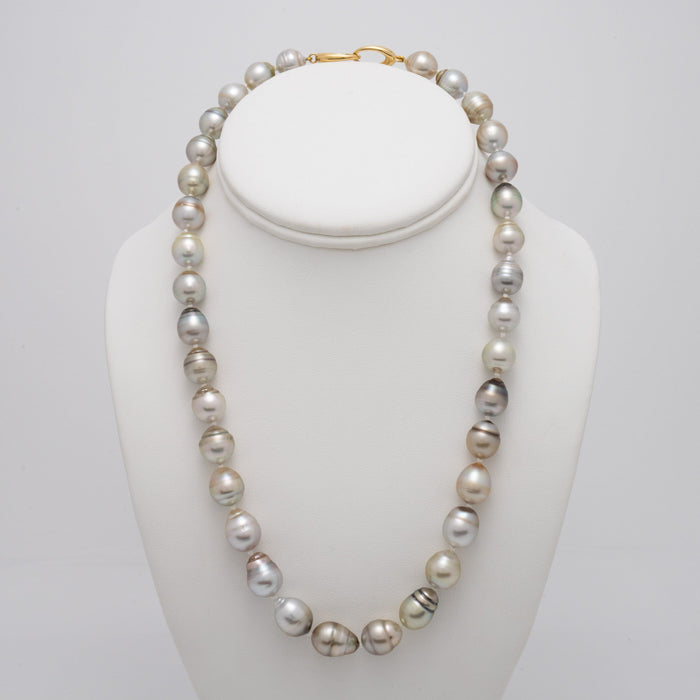 J. Hunter 10.0-11.0 mm Fijian Ringed-Drop Pearls
$3,360
Where they come from
The same species as Tahitian pearls. A different subspecies.
Fijian pearls grow in Pinctada margaritifera, the same species behind Tahitian pearls, but not the same subspecies. Tahitian pearls come from Pinctada margaritifera cumingii, which has a much darker mantle. Fiji's oysters are P. margaritifera typica, with a more orange-colored mantle, and that is where the lighter, more pastel color range comes from: golds, green-golds, chocolates, silvers and soft blues.
The J. Hunter Pearl Farm has built its reputation on that color, and on keeping production small enough to hold the quality.
Our Fijian strands are kept in The Vault, alongside other one-of-a-kind pieces.
Loose pearls and pairs
For earrings, a pendant or a ring
Single Fijian pearls for a pendant or ring, and matched pairs for earrings. True pairs are the hardest to find, so there are only a few.
-
 12.7 x 10.3 mm and 12.6 x 10.2 mm Fijian Drop Pearl Pair
$680
-
 12.9 x 11.0 mm and 12.3 x 11.1 mm Fijian Drop Pearl Pair
$770
-
 12.1 x 10.9 mm and 12.2 x 10.8 mm Fijian Drop Pearl Pair
$1,880
-
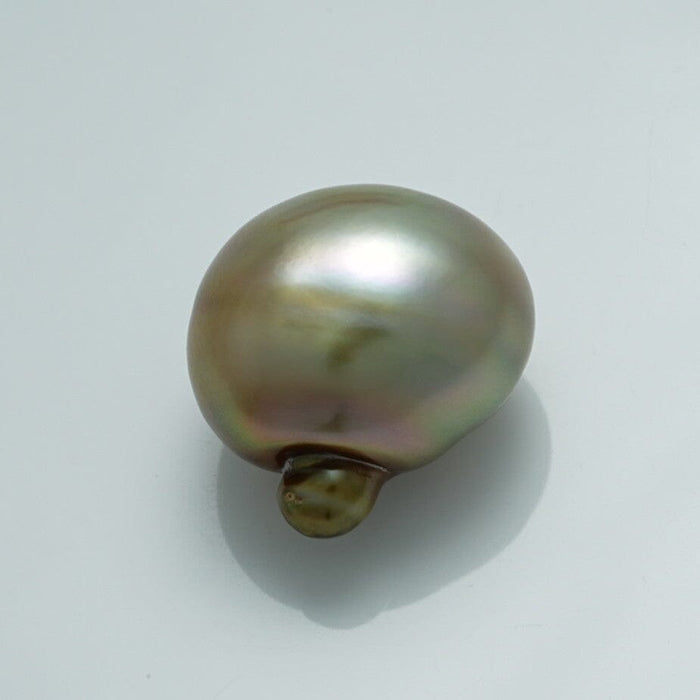 18.1 x 14.1 x 18.8 mm Fijian Baroque Pearl
$390


Questions
About Fijian pearls
What are Fijian pearls?
Cultured pearls grown in the waters of Fiji, almost entirely by the J. Hunter Pearl Farm. They're known for a natural color range not seen in any other pearl, including gold, green-gold, chocolate, pistachio, silver and blue. The farm harvests about 25,000 pearls a year, which makes them among the rarest cultured pearls in the world.
Are the colors natural?
Yes, entirely. Every color in a Fijian pearl occurs naturally. Nothing is dyed, irradiated or color treated. The color comes from the oyster and the waters of Fiji, and it's the main reason these pearls are so prized.
How do they compare with Tahitian pearls?
They grow in the same species, Pinctada margaritifera, but a different subspecies. Tahitian pearls come from Pinctada margaritifera cumingii, which has a much darker mantle and produces the dark bodies with peacock, green and aubergine overtones. Fijian pearls come from P. margaritifera typica, whose mantle is more orange, which is why they lean toward a lighter, more pastel range of gold, green-gold, chocolate, silver and blue. They're also produced in far smaller numbers.
Why do Fijian pearls cost more than other pearls?
Scarcity. One small farm produces nearly all of them, about 25,000 pearls a year. Matching a strand across that color range also takes a large quantity of loose pearls to choose from, which adds time to every finished piece.
Can I see the exact strand or pearl first?
Yes, and with colors this complex we'd rather you did. Ask and we'll send more photos or a short video of the actual piece, or put it on camera for you on a private virtual appointment. No charge and no obligation to buy.
What is the return policy?
Fijian pieces follow our standard return policy. Pieces may be returned within the return window in their original condition. Every order ships fully insured.
See it first
Fijian color is hard to photograph.
The overtones shift with every turn of the pearl, and a still image flattens them. Book a private video viewing and we'll show you the strands and pearls you're considering on camera, in the light.
Book a private viewingNo cost and no obligation.


