

Natural Blue Akoya
Silver and blue akoya, in the color the oyster made. These turn up as a small fraction of an ordinary Japanese harvest and are pulled aside rather than farmed for, so which sizes we can offer moves through the year. When we find them in the quality we want, we buy them and put them on the site. Some seasons we cannot.
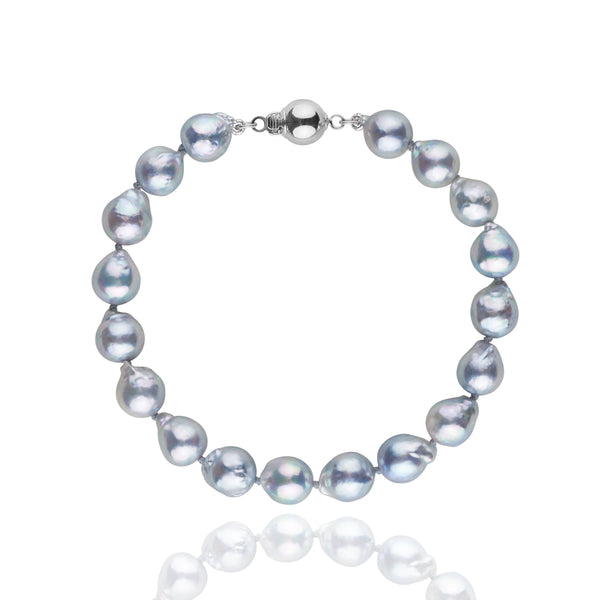
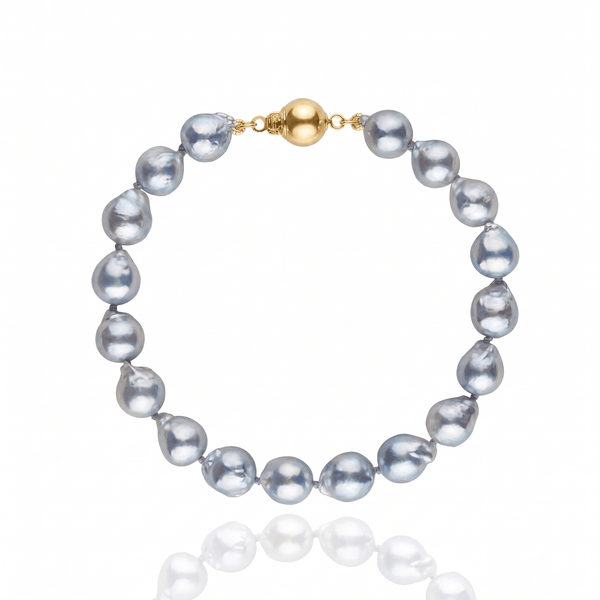
7.5-8.0 mm Silver Blue Akoya Baroque Pearl Bracelet
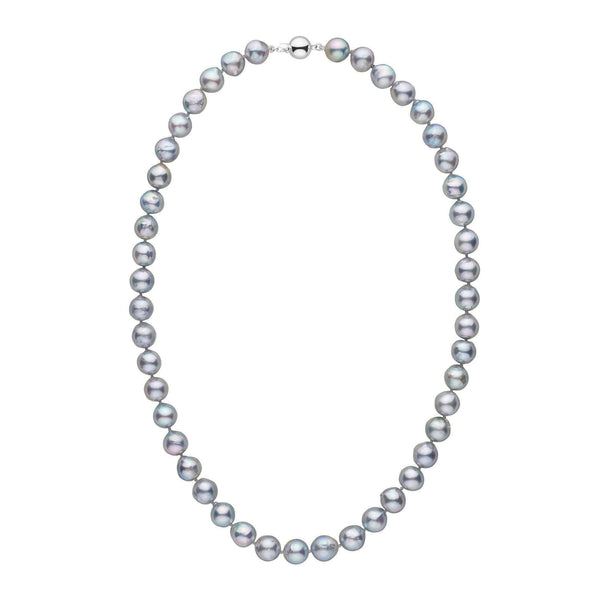
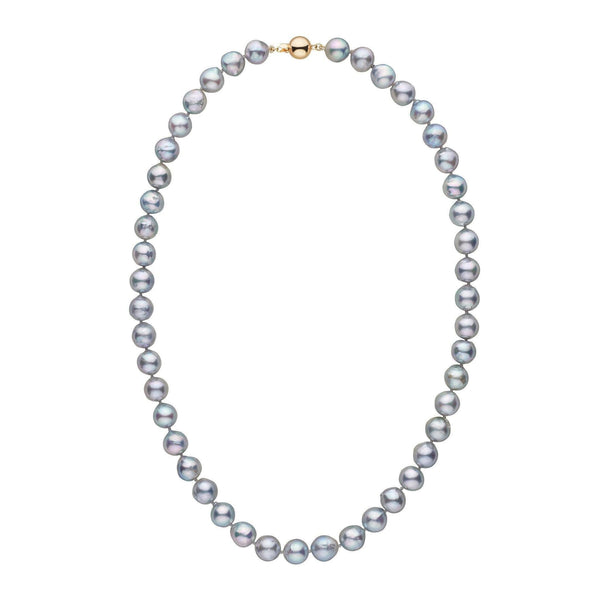
8.5-9.0 mm Silver-Blue Akoya Baroque Pearl Necklace
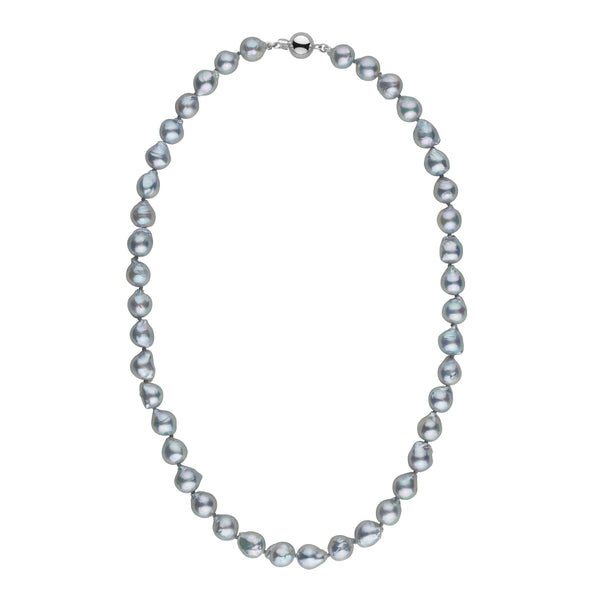
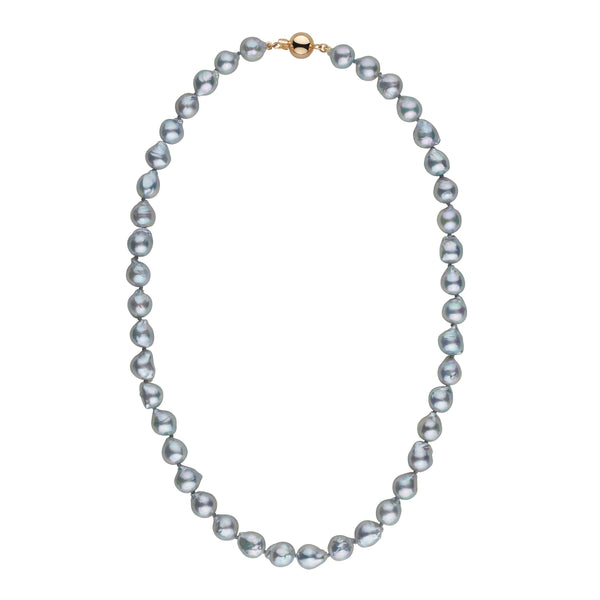
7.0-7.5 mm Silver-Blue Akoya Baroque Pearl Necklace
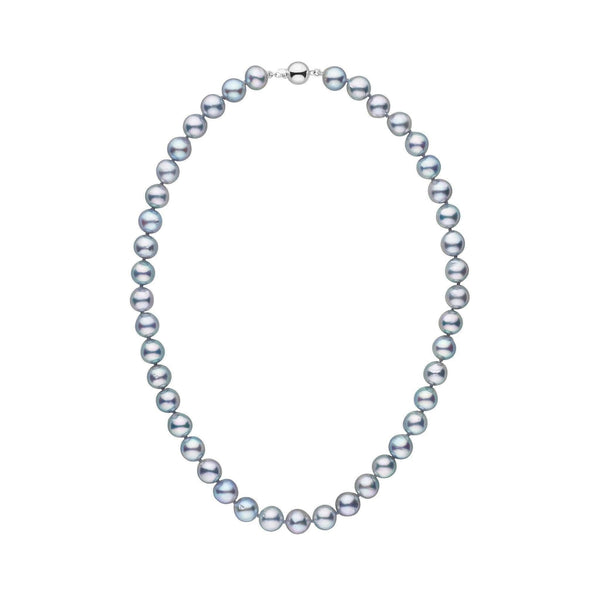
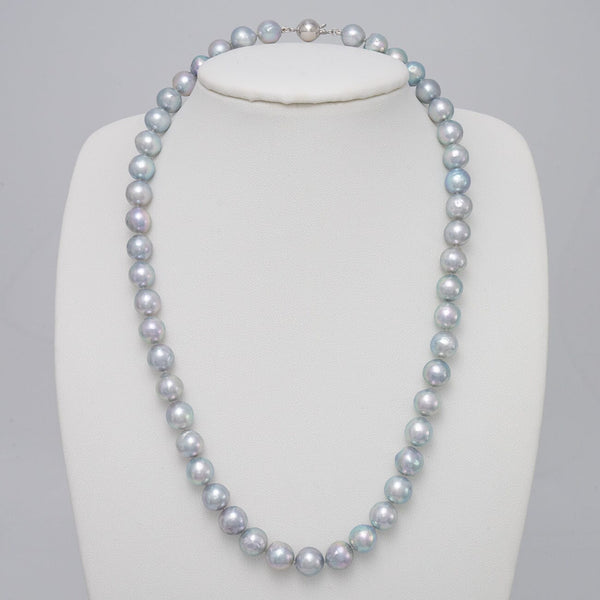
8.0-8.5 mm Silver-Blue Akoya Baroque Pearl Necklace
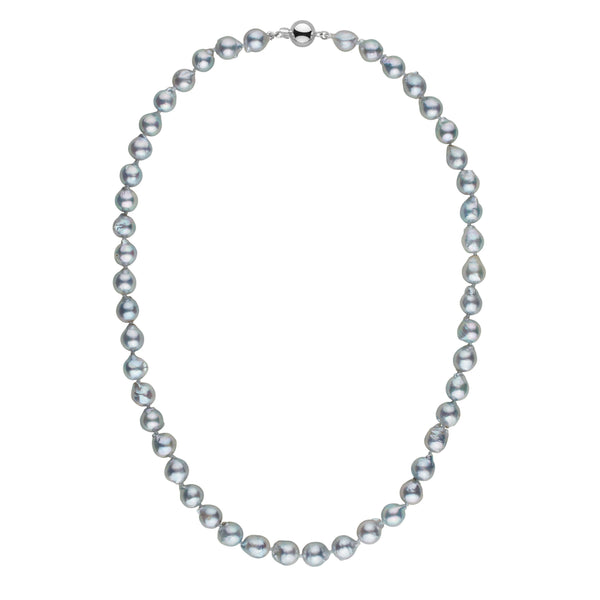
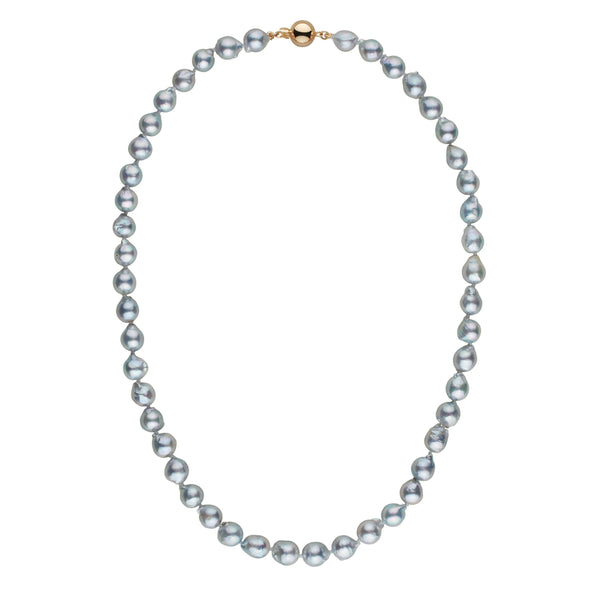
7.5-8.0 mm Silver-Blue Akoya Baroque Pearl Necklace
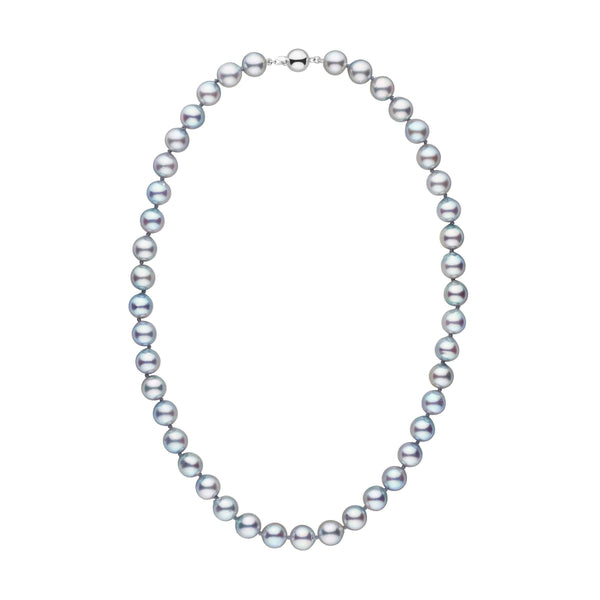
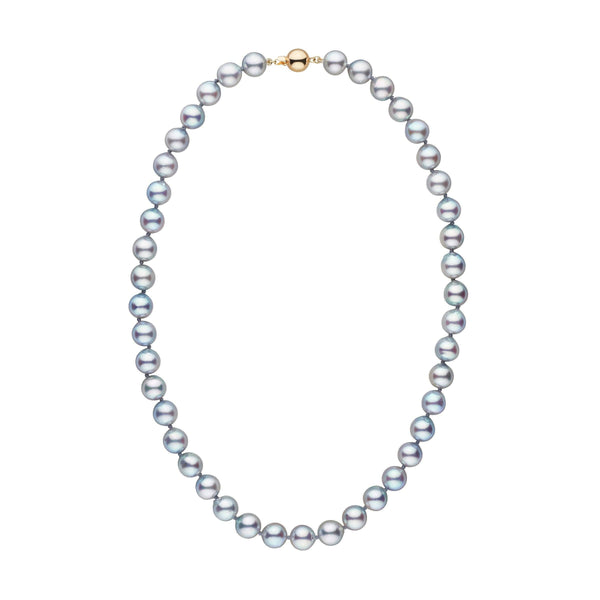
9.0-9.5 mm Silver-Blue Akoya Baroque Pearl Necklace
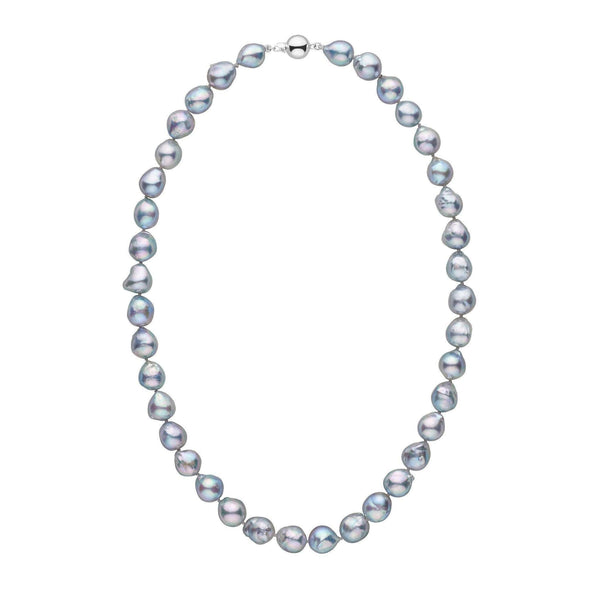
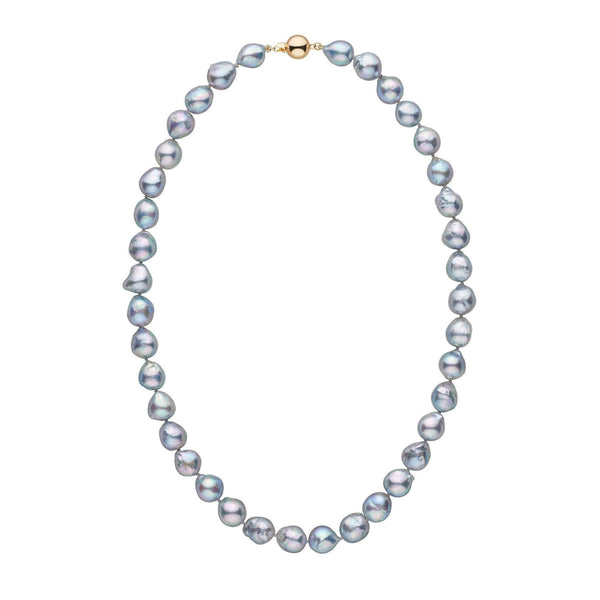
9.5-10.0 mm Silver-Blue Akoya Baroque Pearl Necklace
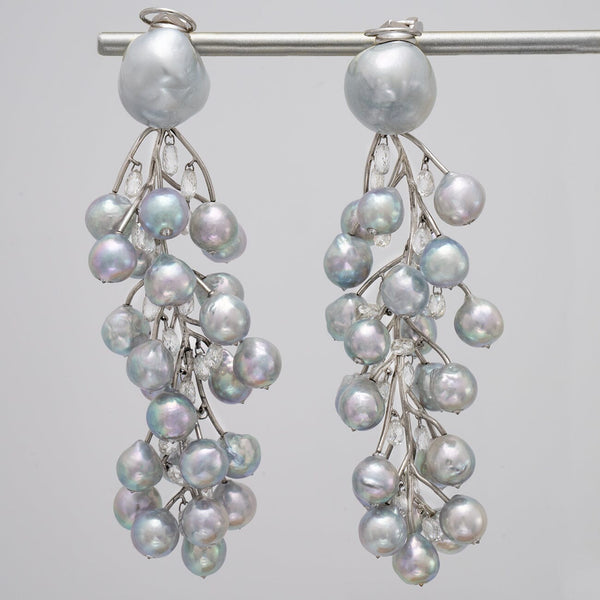
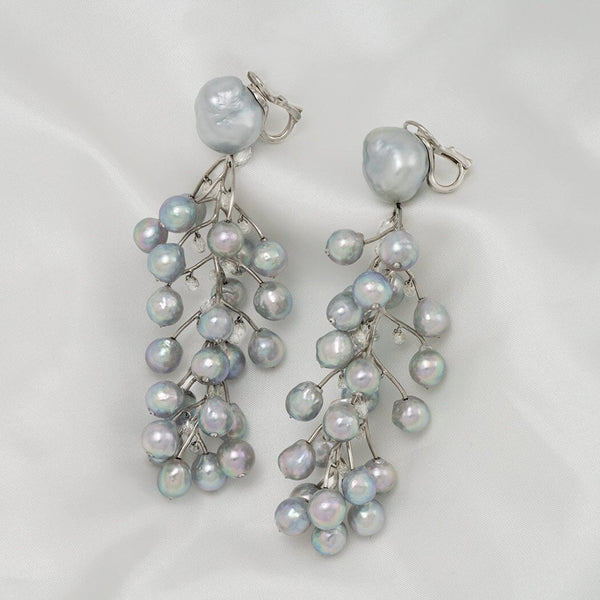
Assael Collection: 7.5-18.0 mm South Sea and Akoya Pearl and Diamond Earrings
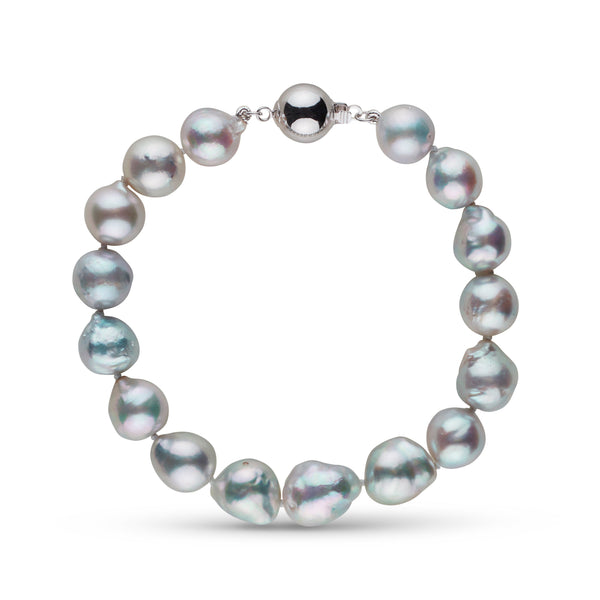
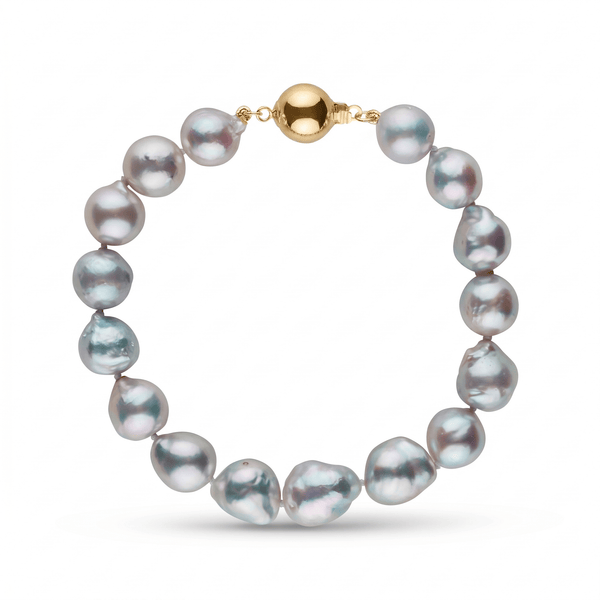
9.0-9.5 mm Silver-Blue Akoya Baroque Pearl Bracelet
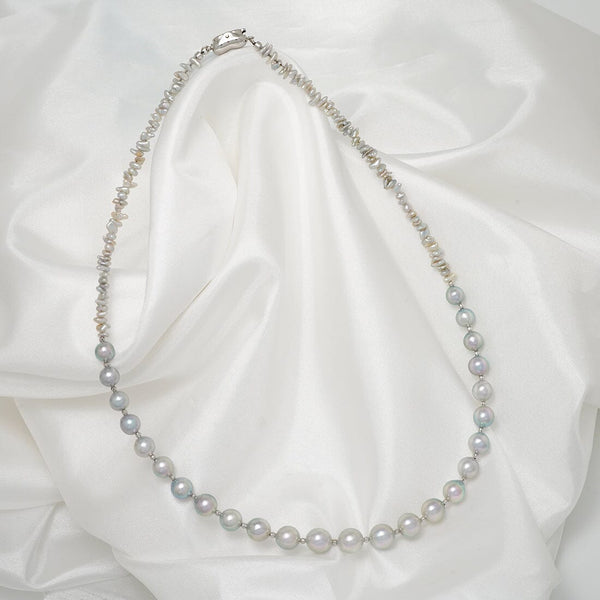
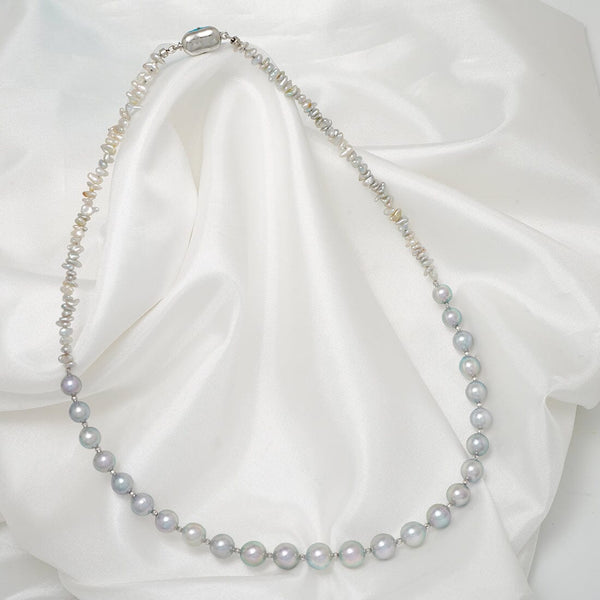
T-25: 7.5-8 mm Near Round Blue Akoya and Keshi Pearl Necklace, 17", 18k & SS – $700
About natural blue akoya
The rarest thing an ordinary akoya harvest produces.
Where the color comes from
It is in the pearl, not on it. Blue akoya take their color from organic material laid down inside the nacre as the pearl formed. That is also why the color sits differently in every pearl and why it shifts as you turn it in the light.
The color range
Silver through steel blue, with overtones that run to pistachio, aubergine and green. Some are pale enough to read as a cool grey indoors and then go clearly blue in daylight. Photographs never quite settle the question, which is why we will send you more of them.
Shape
Mostly baroque. The same irregular nacre that traps the color tends to disturb the shape, so a perfectly round blue akoya is rare enough to be priced as its own thing. On a baroque the shape is what makes the light move.
Availability
Nobody farms for blue, so supply is whatever a season happens to produce. We buy when we find quality we are happy with, which means most sizes are here most of the time and a few are not. If the size you want is missing, ask and we will tell you when we expect it back.
Before you buy
Is the blue color natural, or is it dyed?
Natural. These are not dyed and the color is not an overtone added after the fact. It comes from organic material inside the nacre, which is why it varies from pearl to pearl in a way no dye ever does. Dyed blue pearls exist and they look like what they are, flat and uniform, with the color sitting on the surface rather than coming out of it.
Why are these not given a letter grade?
Because the standard akoya scale does not fit them. It assumes a round pearl with a white body color, and these are almost always baroque with color running through a range of blues. That is not a statement about quality. Every one is hand-selected, and what we are watching for is beige coming through the color, which signals thin nacre, and any nacre fault that would affect how the pearl wears.
Can I see the exact piece before it ships?
Please do ask, and on this collection more than any other. Blue is the hardest color to photograph honestly, and a screen will not tell you whether a strand reads silver or genuinely blue on your skin. Ask on any product page and we will send more photographs or a short video, or show it to you live on camera, at no cost and with no obligation to buy.
Will this size stay available?
Usually, but not always. These are stocked pieces rather than one-offs, so a size we carry today we can normally supply again. What we cannot control is the harvest. Nobody farms for blue, so if a season does not produce the quality we want in a given size, that size goes quiet for a while. Tell us what you are after and we will let you know when it comes in.
Can you match blue pearls across several pieces?
Within one order, usually yes, and we will always try. Across orders months apart it is much harder, because we are matching to whatever came in since. If you think you will want a bracelet or earrings to go with a blue strand, the time to say so is when you order the strand, while the pearls are still in front of us.
Want to see them properly?
Blue is the one color a photograph cannot settle. Book twenty minutes and we will show you what we have on camera, turn it in the light, and tell you honestly how it reads.


