

Pearl Quality
Pearls are unique among gemstones in that they are natural, organic products of living creatures, so they have different grading standards. We want our customers to make informed decisions when they buy pearls from us. With this in mind, we've put together this illustrated guide to help answer some of the most common questions about pearls.
Type of Pearl
The first step is to identify the type of pearl; Freshwater, Akoya, Tahitian or South Sea, the four main pearl types used in jewelry. Each type of pearl is produced by a different species of mollusk (pearl oyster), and each mollusk lives in a different region of the world under very specific climatic conditions.

Determining Pearl Quality ~ What are high quality pearls?

Pearl Shape
A perfectly round pearl is very rare. The rounder the pearl, the more valuable it is. Baroque pearls are not symmetrical in shape, and can be lustrous and appealing, but will typically cost less than round pearls.

loose-pearls
When all other value attributes are identical, the value of a pearl is determined by its size. The larger the pearl the more valuable. Pearls are measured by their diameter in millimeters. Tiny seed pearls can be smaller than a single millimeter, while South Sea pearls as large as 20 mm have been found. If all other quality factors are equal, the size of a pearl will determine its value. Only a 1 millimeter increase in pearl size is a substantial jump in both appearance and value. The average pearl sold today is between 6.5 mm and 7.0 mm.

Pearl Luster
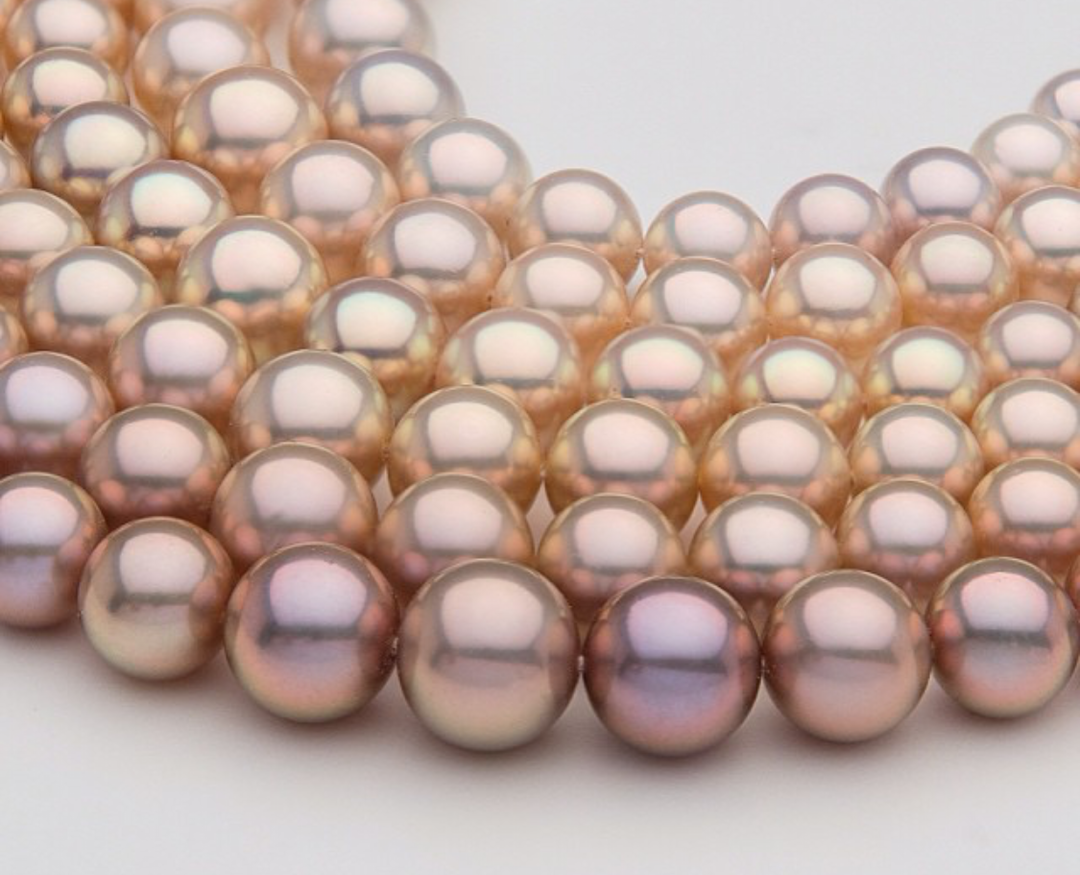
Luster is the measure of quantity and quality of light that is reflected from the surface, or just under the surface of a pearl. The luster of good quality pearls is sharp and bright. You should be able to see your reflection clearly on the surface of a pearl. Any pearl that appears too white, dull or chalky, is of low quality.
Pearl Paradise uses the most recognized ranking system: A, AA, AA+, and AAA to grade the pearls featured on our website. Six factors determine the quality, value, and beauty of pearls: nacre, luster, surface, shape, color and size.

Pearl Color
Pearls come in a variety of colors, from white to black and every shade in between. It is important to distinguish between color and overtone. For example, some naturally occurring colors are white, champagne, aqua, green, golden, and black. Within each color category, there are a number of common overtones, or subtle variations in the surface iridescence. Choosing your preferred overtone is a matter of taste, although rosé overtones tend to look best on fair skin, while cream and gold-toned pearls are most flattering to those with darker complexions.
Pearl Surface
The cleaner the surface of the pearl, the more valuable it is. Look for an absence of disfiguring spots, bumps or cracks on the surface of a pearl, also known as "cleanliness." Notice that the highest quality pearls have a sharp, mirror-like reflection.

Pearl Nacre
Nacre is the natural substance that the mollusk secretes to protect its sensitive flesh from irritants such as shell fragments, parasites or implanted beads. This is the same beautiful iridescent material that lines the inner surface of the mollusk shells, aptly named mother of pearl. Nacre thickness is a quality characteristic only applied to saltwater, bead-nucleated pearls. It is not applied to keshi pearls or freshwater pearls as both are composed of solid nacre.


